Wild West: Where Business, Geopolitics and Economic Warfare Collide :: GENERAL MICHAEL HAYDEN TALKS THE INTERNET
Economic Security on the Cyber Firing Line
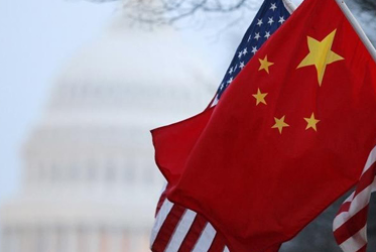
There is a determined effort by the government of China to get into the business of stealing economic secrets to put into use in China to compete economically, obtain free research and development, gain market lead, and competitive advantage. While China’s economy has had very rapid growth over the last 30 years, they are afraid that they are going to get stuck in a technology gap. The gap being a reliance on the West for critical technologies and advancement with an offsetting economic slowdown.
To stay competitive and to promote economic growth, China has outlined a way forward targeting key industries with a focus on strategic importance. This includes “green” technologies, new information technologies, high-end manufacturing, and the defense industry. This approach focuses on two key areas – spending more on research and development, as well as targeting key sectors for espionage to go after critical technologies.
We can all agree that in the digital age and especially in the context of cyber espionage, China is not alone in an attempt to gain proprietary information and trade secrets, which experts say poses one of the most serious threats. These threats lead to in some cases to direct threats to national security.
While this is nothing new, and has been occurring since the first “spy’ slid a piece of information to their handler. However, the impact today can be immediate and potentially catastrophic with billions in funding for research and development lost along with the technology, competitive technological edge, promise, and economic loss. A key impact being associated national security concerns.
In 2011, the Office of the National Counterintelligence called Chinese actors “the world’s most active and persistent perpetrators of economic espionage,” in a report to Congress.
A good example for this is a Chinese government initiative called Project 863, which provides resources for efforts to steal sensitive U.S. economic information and technology. It is much more effective for the Chinese to steal innovations and intellectual property.
Essentially the ‘source code’ of advanced economies.
Research into U.S. Justice Department records indicate that at least 58 defendants have been charged in U.S. Federal Course related to Chinese espionage since 2008. Some of which are:
- A former B2 Program engineer Nosher Gowadia was found guilty of selling cruise missile technology to China.
- Kexue Huang pleaded guilty on espionage charges that he sold trade secrets from Dow Chemical and Cargill Inc. to China
- Larry Wu-Tai Chin worked for the U.S. Intelligence community for 35 years selling highly classified information pertaining to intelligence agencies and their activities to China
- Chi Mak, a Chinese born engineer was convicted of passing secrets on the U.S. Navy quiet drive propulsion technology to China.
For U.S. Companies that have invested in China, there is a continuous pressure and policy to force technology transfer in violation of international trade agreements. This is being done through requiring joint venture companies as a condition to obtain access to Chinese markets.
While China has been the most aggressive, it is not the only country driving and attempting cyber espionage. We are in an era where global intelligence regimes within countries are capable of extracting data and ‘competitive’ intelligence globally with little effort and almost complete impunity. Much of the espionage goes unnoticed because it takes place in difficult-to-detect cyber space.
U.S. Intelligence agencies in 2011 reported to Congresses that both China and Russia to steal technology and information as a matter of national policy. The report stated that cyber espionage has focused on communications technology, green energy, healthcare systems, military data, pharmaceuticals, as well as air and space technologies. The report was a collective assessment of 14 agencies.
Despite the high costs and the increasing threats, organizations that have experience a breach are reluctant to publicly acknowledge incidents let alone acknowledge what has been stolen.
The most important characteristic of these developments is that capabilities can now be targeted and persistent with unprecedented precision. China has attracted the most attention because it has been widely perceived as having the most to gain from such initiatives. However, the key fact remains that other countries almost certainly have similar capabilities
Where does this leave us? With a lot of work to do. If innovation is the key to the future there are fundamental problems to address with innovation and technology. There are distinct signs that our lead in technology is indeed slipping. A recent report from the Boston Consulting Group based on a date such as R&D spending; new patents, and new venture funding show that the U.S. has slipped form its number one position to eighth globally.
We are losing some the technological edge we had developed due to espionage, counterfeiting and theft. The Intelligence Community must have a clearer and stronger role in gathering and analyzing economic data regarding such attacks and making information available to appropriate government and commercial entities.
We must make the broader investment in education with more focus on science, technology, engineering and math (STEM) skills. Finally and fundamentally; we must be more open and aggressive about identifying, acknowledging and reporting cyber incidents.
Make no mistake; we are in a silent, economic cyber war. The players are real and state sponsored. And they are succeeding.
By Richard Zaluski, President, CEO Centre for Strategic Cyberspace + Security Science / CSCSS
Related posts